
Getting a PTAC ready for winter takes about an hour per unit: clean the filters, clear the coils and drain, seal the wall sleeve and test the heat before the first cold night.
TL;DR
- Clean the filters first. Amana, GE and Friedrich all call for cleaning PTAC filters about once a month. Genuine Comfort’s Ultra Series manual says every 3 months.
- Test the heat early. Switch to heat a few weeks before you need it. A light burning smell from dust on the heater is normal and should fade quickly.
- Leave freeze protection on, and leave the power on. Amana units start heating when the room drops below 40°F by default, and GE’s Freeze Sentinel aims to bring the room up to 46°F. Neither works without power.
- Heat pumps switch to electric heat in the cold. GE Zoneline heat pumps switch below 25°F outdoors. Friedrich PZ heat pumps switch when the outdoor coil stays below 26°F.
- Test the LCDI cord, and never use an extension cord. Press TEST, then RESET. If RESET will not stay in, stop using the unit and call a technician.
The Short Answer
To get a PTAC ready for winter, clean or replace the air filters, have the coils, base pan and drain cleaned, and check the caulking around the wall sleeve. Close the vent door, clear the outdoor grille, and run the unit in heat mode for a test cycle. Confirm freeze protection is turned on, test the LCDI power cord, and set sensible temperature limits.
Do these steps in the fall, before heating season starts. ENERGY STAR’s maintenance checklist recommends checking the heating system in the fall. A PTAC that heats poorly in October is easier to fix than one that fails in a January cold snap.
PTAC Winter Checklist at a Glance
| Step | What to do | Who does it |
|---|---|---|
| 1. Filters | Clean or replace the front air filters | Owner or staff |
| 2. Coils, base pan, drain | Clean the coils, base pan and drain passages | Technician |
| 3. Wall sleeve and vent door | Check the caulking and tilt, then close the vent door | Owner or staff |
| 4. Outdoor grille | Clear leaves and debris from the outdoor louver | Owner or staff |
| 5. Heat test | Run heat mode and confirm warm air | Owner or staff |
| 6. Freeze protection | Confirm it is turned on and the unit has power | Owner or staff |
| 7. Cord and circuit | Test the LCDI cord and confirm the circuit matches the heater | Owner, electrician if needed |
| 8. Thermostat | Set temperature limits and avoid big jumps on heat pumps | Owner or staff |
| 9. Clearance | Move curtains and furniture away from the unit | Owner or staff |
Step 1: Clean or Replace the Air Filters
A dirty filter is the most common reason a PTAC heats poorly. It cuts airflow across the coil and heater, so the unit works harder and the room warms slowly.
| Brand | Filter cleaning interval | Source |
|---|---|---|
| Amana | Once a month, or more often in dusty locations | Amana J/K-series installation and operating manual |
| GE Zoneline | At least every 30 days | GE Zoneline owner’s manual |
| Friedrich | At least monthly, more often if conditions warrant | Friedrich PZ-series manual |
| Genuine Comfort Ultra Series | Once every 3 months (a filter light comes on after 900 hours) | Genuine Comfort Ultra Series user manual |
To clean a reusable filter, turn the unit off first. GE recommends vacuuming off heavy dirt, then running water through the filter from the back side. Friedrich suggests mild detergent in warm water. Let the filter dry completely before you put it back.
Never run a PTAC without its filters. GE and Genuine Comfort both warn against it. If a filter is torn or warped, replace it with the part number listed in your manual. PTAC4Less carries replacement PTAC filters for several brands.
Step 2: Clean the Coils, Base Pan and Drain
Amana recommends a once-a-year cleaning and inspection that covers the indoor and outdoor coils, the base pan and the drain passages. Friedrich says to inspect the coils and base pan annually or semiannually and clear out lint, dirt, leaves and paper. Genuine Comfort’s Ultra Series manual calls for a qualified technician to clean the indoor coil every three months.
This job usually means pulling the chassis out of the sleeve, so most owners leave it to a technician. If your team does it in-house, follow the manual closely:
- Unplug the unit before cleaning.
- Do not use commercial-grade coil cleaners. Amana warns that some contain EDTA, which can shorten the life of the outdoor coil.
- Use low or no water pressure. Amana specifies garden-hose pressure and water no hotter than 120°F.
- Let the unit dry for 24 hours before reconnecting power, per Amana.
Clean coils matter for safety as well as heat output. Amana’s manual warns that dried lint and fungus inside the unit are fire hazards.
Step 3: Check the Wall Sleeve and Close the Vent Door
Cold drafts often come from around the PTAC, not through it. Amana’s manual says to check the caulking around the wall sleeve so that any air and water openings are properly sealed.
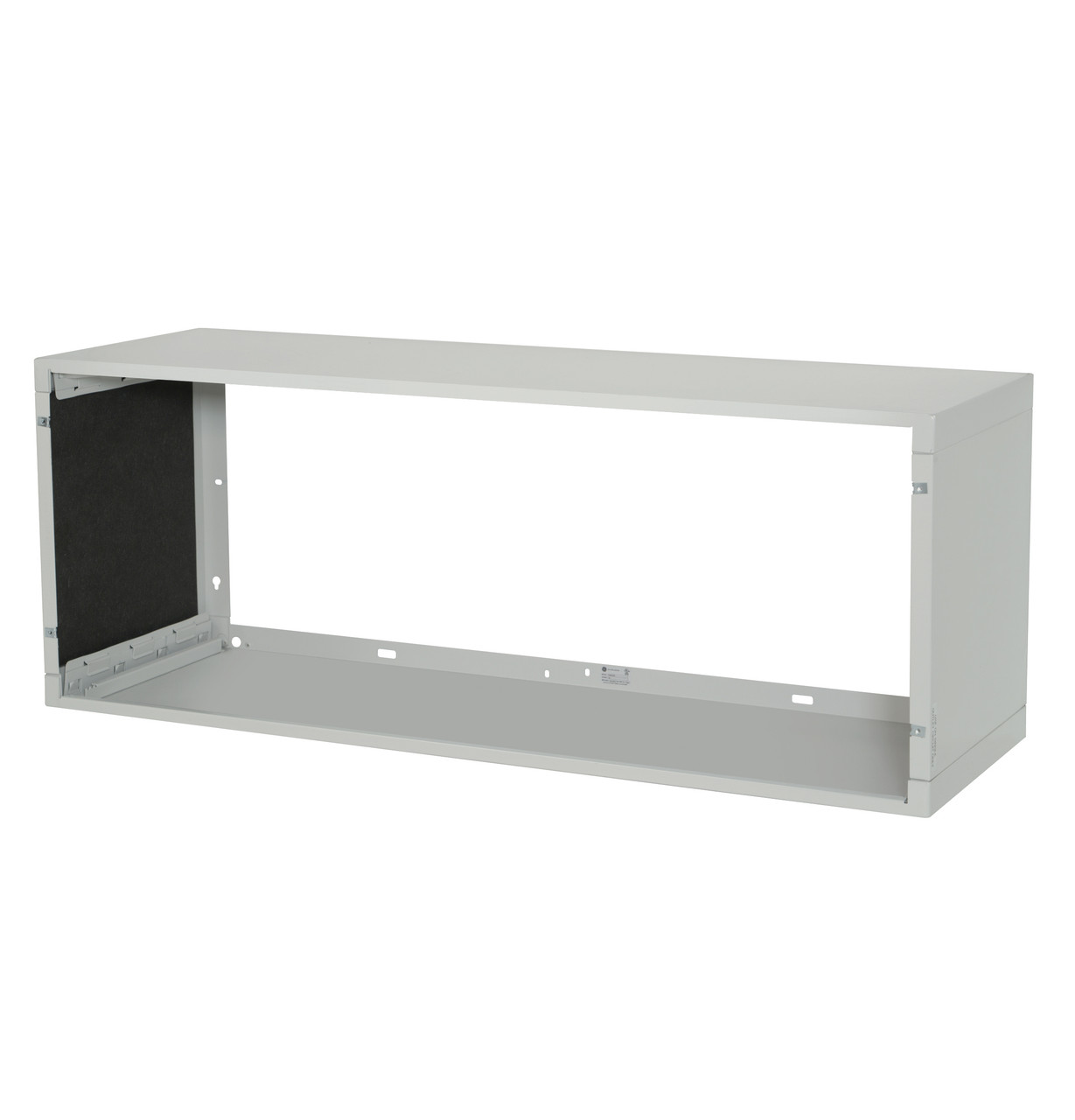
The U.S. Department of Energy estimates that sealing air leaks around a home can save 10% to 20% on heating and cooling bills. Re-caulk any gaps or cracked sealant around the sleeve, inside and out.
Check the sleeve’s level too. Amana calls for a 1/4 bubble tilt toward the outside so water drains outdoors. Other brands set their own tilt, so use your manual’s figure. If a sleeve is rusted through or bent, PTAC4Less stocks replacement wall sleeves.
Close the vent door
Many PTACs have a vent door that lets outdoor air into the room. GE’s energy tip is to keep it closed so unconditioned air does not enter. Genuine Comfort’s troubleshooting chart lists an open vent door as one reason a unit is not heating the room.
Step 4: Keep the Outdoor Grille Clear
The outdoor side of a PTAC needs open airflow, especially on heat pump models that pull heat from outdoor air. Amana warns that if outdoor air is blocked or bounced back into the unit, the compressor may cycle on and off rapidly. That can damage the compressor or void the warranty.
- Remove leaves, nests, plastic and other debris from the outdoor louver.
- Keep plants, fences and stored items away. Friedrich’s PZ-series manual calls for 12 inches of clearance from minor obstructions and 36 inches from major ones such as a wall or fence.
- After snowfall, check that drifts are not piled against ground-floor units.
Should you cover a PTAC in winter
None of the Amana, GE or Friedrich manuals reviewed for this checklist recommend an outdoor cover. A cover blocks the airflow a heat pump needs, so do not cover any unit you plan to run. For a cooling-only unit in a closed room, check with the manufacturer first, and remove the cover before running the unit.
Step 5: Test the Heat Before the First Cold Night
Switch each unit to heat mode a few weeks before you expect to need it. Set the temperature a few degrees above the room temperature and confirm warm air within several minutes. Some units hold the compressor for a few minutes after a restart. Genuine Comfort units, for example, wait about 3 minutes, so a short delay on a heat pump is normal.
A light burning smell during the first minutes of heating is usually dust burning off the heating elements. GE and Friedrich both note it should fade quickly. Genuine Comfort says a mild odor may last about 10 minutes after long inactivity. Keep the room ventilated while it clears. A smell that does not fade, or any smoke, means unplug the unit and call a technician.
Heat pump or electric heat: what to expect
A PTAC with electric heat uses a resistance heater, like a large toaster coil. A heat pump PTAC moves heat from outdoor air into the room, which uses less electricity, and switches to its electric heater when it gets too cold outside. The switch point depends on the brand:
| Unit | When it switches from heat pump to electric heat |
|---|---|
| Amana J/K-series PTH | When the coil temperature falls below 20°F, or when the room falls 4°F below the set point |
| GE Zoneline AZH | When the outdoor temperature is lower than 25°F |
| Friedrich PZ-series PZH | When the outdoor coil stays below 26°F for 3 minutes; the compressor restarts once the coil reaches 36°F |
| Genuine Comfort Elite Series | Rated for heat pump heating down to 23°F (–5°C) outdoors |

Frost on the outdoor coil is normal in cold weather. GE explains that during a defrost cycle both fans stop while the compressor runs to melt the frost. If the unit gives no heat at all, check the breaker, the cord’s reset button, the vent door and the filters before calling for service. The Amana PTAC troubleshooting guide explains the most common error codes.
Step 6: Confirm Freeze Protection Is On
Freeze protection turns on the heat automatically when a room gets dangerously cold, even if nobody has set the unit to heat. It protects pipes in empty rooms, which matters for hotels, apartments and seasonal buildings.
| Brand | Freeze protection behavior |
|---|---|
| Amana | Runs the fan and electric heat when the unit senses below 40°F (adjustable), and turns off above 43°F. Active whenever the unit has power and the master switch is on. |
| GE Zoneline (Freeze Sentinel) | Tries to raise the room to 46°F. On by default, and active whenever the unit is plugged in, even if it is turned off. |
| Friedrich PZ-series | Runs the fan on high and the electric heat when the room falls to 50°F, and stops at 55°F. Works in any mode. |
| Genuine Comfort Elite Series | Automated room freeze protection at 32°F (0°C). |
Freeze protection can be turned off in the settings on several brands, so confirm it is enabled on every unit. It also needs power. If you shut off the breaker or unplug a unit in an empty room for the winter, freeze protection stops working.
Step 7: Test the Power Cord and Check the Circuit
Most PTACs use an LCDI power cord, which senses damage to the cord and cuts power. Test it before heating season:
- With the unit plugged in, press the TEST button on the plug head. The RESET button should pop out with a click.
- Press RESET until it clicks back in. The unit should have power again.
- If TEST does not trip or RESET will not stay engaged, GE says to stop using the unit and contact a qualified technician.
Never run a PTAC on an extension cord or adapter plug. Amana, GE, Friedrich and Genuine Comfort all prohibit it. If a cord is damaged, replace it with the correct PTAC power cord for the unit and circuit.
Match the heater to the circuit
Winter is when a PTAC draws the most power, because the electric heater pulls far more current than cooling. The heater size is tied to the circuit amperage and plug type. Friedrich’s PZ-series is a typical example:
| Heater size | Circuit | Plug |
|---|---|---|
| 2.5 kW | 15 amp | NEMA 6-15 |
| 3.6 kW | 20 amp | NEMA 6-20 |
| 5.0 kW (12,000 and 15,000 BTU models) | 30 amp | NEMA 6-30 |
A breaker that trips every time the heat comes on points to a mismatch or a fault, so have an electrician check it. The wire gauge and amp rating guide explains how circuits, wire and plugs fit together.
Step 8: Set the Thermostat for Winter Savings
Heat pump PTACs save the most money when they stay in heat pump mode. GE advises changing a heat pump’s thermostat by no more than one degree at a time. Raising the setting 2 to 3 degrees makes the unit use its electric heating elements, which use more electricity.
The Department of Energy says turning a thermostat down 7°F to 10°F for 8 hours a day can save as much as 10% a year on heating and cooling. For heat pumps, DOE adds a caution: do not set back manually if it brings on the electric backup heat, and use a thermostat designed for heat pumps.
For hotels and rentals, temperature limits stop guests from setting rooms to extremes. Most digital PTACs have them:
- GE Zoneline: the default heating range is 60°F to 78°F.
- Amana: the maximum heat setting defaults to 80°F and can be set from 68°F to 90°F.
- Genuine Comfort Ultra Series: DIP switches narrow the range to as little as 68°F to 75°F.
Wall-mounted PTAC thermostats are another option. Amana recommends mounting a remote thermostat about five feet above the floor on an inside wall.
Step 9: Clear Space Around the Unit
Curtains, beds and furniture pushed against a PTAC block the airflow it needs to heat the room. Amana requires a minimum of eight inches between the unit and furniture, beds or other objects.
Electric heat raises the stakes. Genuine Comfort’s Ultra Series manual calls for at least 3.28 feet (1 meter) between a unit with an electric heater and combustible materials. Check your own unit’s manual for its clearance, and move bedding, papers and drapes well away from the discharge grille.
When to Call a Technician
Most of this checklist is routine. Call a qualified technician if any of these show up:
- The cord’s RESET button will not stay in, or the breaker trips more than once.
- A burning smell that does not fade, or any smoke.
- An error code that comes back after a reset.
- Ice that stays on the coil, or a heat pump that seems stuck in defrost.
- No heat after you have checked power, filters, the vent door and the thermostat settings.
For common repairs and their causes, see Tips for Repairing PTAC Units.
Repair or Replace Before Winter
A pre-season check is also the best time to decide whether an aging unit is worth fixing. If a PTAC needs a compressor, a new heater and a sleeve, replacing it before the cold sets in avoids an emergency swap mid-winter. Repair or Replace Your PTAC Unit? walks through the decision.
If you replace a unit, a heat pump model usually costs less to run than electric heat whenever it is above its switch point. The Genuine Comfort PTAC lineup and the full range of new PTAC units include heat pump and electric heat models in standard 42-inch sizes. For help matching a unit to your sleeve and circuit, call PTAC4Less at 833-782-2453.
Frequently Asked Questions
To get a PTAC ready for winter, clean the air filters, have the coils, base pan and drain cleaned, check the caulking around the wall sleeve and close the vent door. Then run the unit in heat mode, confirm freeze protection is on, and test the LCDI power cord.
Do not cover a PTAC you plan to run, especially a heat pump model, because a cover blocks the outdoor airflow the unit needs. The Amana, GE and Friedrich PTAC manuals do not recommend an outdoor cover. For a cooling-only unit in a closed room, check with the manufacturer and remove any cover before running the unit.
A PTAC that is not heating is most often caused by dirty filters, an open vent door, a tripped breaker or a tripped LCDI cord. Temperature limits set too low can also stop a unit from heating the room. If the unit still gives no heat after these checks, call a qualified technician.
The switch point depends on the brand. GE Zoneline heat pumps switch to electric heat below 25°F outdoors, and Friedrich PZ-series heat pumps switch when the outdoor coil stays below 26°F for 3 minutes. Amana PTH units switch when the coil temperature falls below 20°F or the room falls 4°F below the set point.
Freeze protection is a PTAC setting that turns on the heat automatically when a room gets too cold, to help protect pipes in empty rooms. Amana units trigger below 40°F by default, and GE Freeze Sentinel aims to raise the room to 46°F. Freeze protection only works while the unit has power.
Amana, GE and Friedrich recommend cleaning PTAC filters about once a month, and more often in dusty locations. Genuine Comfort Ultra Series units call for cleaning every 3 months, with a filter light after 900 hours of operation. A PTAC should never run without its filters in place.