
TL;DR
- Plan on a minimum of about 20 BTUs per square foot as a baseline for effective heating and cooling.
- As a baseline, a 250 to 300 sq. ft. room needs 7,000 BTUs, a 350 to 400 sq. ft. room needs 9,000 BTUs and a 450 to 550 sq. ft. room needs 12,000 BTUs. Rooms with high ceilings should spec up one tier.
- An oversized PTAC cools quickly but runs too short a cycle to pull humidity out of the air, leaving rooms cold and clammy. An undersized PTAC runs constantly, drives up energy costs and wears out faster.
- Kitchens, break rooms and laundry facilities need an extra 2,000 to 4,000 BTUs. South- or west-facing rooms with large windows need approximately 10% more BTUs.
Every room requires a minimum of 20 BTUs per square foot for effective heating and cooling. For properties managing multiple units or guest rooms, getting this right is a cost and liability issue as much as a comfort one.
Use this as your baseline when sizing commercial air conditioners across your property:
| Room Size | BTUs Needed |
| 150 – 250 sq. ft. | 6,000 BTUs |
| 250 – 300 sq. ft. | 7,000 BTUs |
| 300 – 350 sq. ft. | 8,000 BTUs |
| 350 – 400 sq. ft. | 9,000 BTUs |
| 400 – 450 sq. ft. | 10,000 BTUs |
| 450 – 550 sq. ft. | 12,000 BTUs |
| 550 – 700 sq. ft. | 14,000 BTUs |
Rooms with high ceilings? Spec up one tier.
Need to size multiple rooms at once? Call our team at (855) 383-3467 and we’ll walk through your floor plan and do the BTU calculations with you.
Why Oversizing Is a Property Management Problem
Guests complain. Tenants submit maintenance requests. Review scores drop.
An oversized unit cools a space quickly but runs too short a cycle to pull humidity out of the air, leaving rooms feeling cold and clammy. That’s one of the most common sources of comfort complaints in hotels and multi-unit properties, and it’s entirely preventable.
Undersized units create the opposite problem: they run constantly, drive up energy costs, and wear out faster, meaning more frequent replacements across your portfolio.
Properly sized, energy-efficient PTAC units hit the sweet spot: consistent comfort, lower operating overhead, and fewer service calls.
Getting the BTU spec right from the start pays off at every room, across every property.
PTAC vs. Central Air: Why Facility Managers Choose PTAC
Before diving into BTU variables, it’s worth addressing the comparison facility managers most often raise.
Central air systems condition an entire building from a single source. That works well for open-plan offices, but in hotels, apartment buildings, and assisted living facilities, it creates a real problem: one thermostat cannot serve dozens of occupants with different needs.
PTAC units solve this.
Each room is independently controlled, independently sized, and independently serviceable. When a unit needs replacing, you swap one room out without touching the rest of the system. And because modern energy-efficient PTAC units are built to tight performance standards, the per-room operating cost is highly competitive with central air at scale.
4 Variables That Affect BTU Requirements Across Your Property
1. Room Square Footage
Your floor plan sets the baseline. Use the chart above for each room type or unit size across your property.
2. Geographic Region and Climate
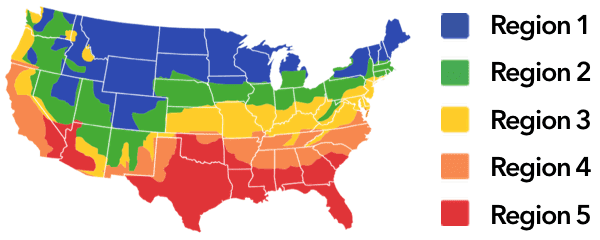
Properties in colder climates need units with heat pump capability. Cooling-only units will not meet year-round demand. Properties in high-heat southern regions should spec up a tier to handle sustained summer loads without straining the equipment.
3. Room Function and Occupancy Type
Different spaces generate different heat loads:
- Fitness centers and hotel gyms: Body heat from multiple occupants plus equipment heat requires at least one additional BTU tier
- On-site kitchens, break rooms, or laundry facilities: Add 2,000–4,000 BTUs to account for appliance heat output
4. Sun Exposure and Building Insulation
- South- or west-facing rooms with large windows: Budget approximately 10% more BTUs per unit
- Shaded or interior-facing rooms: You may be able to spec approximately 10% less BTUs
- Older buildings with poor insulation: Size up, and flag insulation gaps for your capital improvement plan. Better insulation reduces energy costs across a property more effectively than compensating with oversized units
Spec the Right Units Across Your Entire Property
PTAC units are the industry standard for hotels, multi-family properties, assisted living facilities, and commercial spaces. Self-contained, individually controlled, and far more cost-effective to install and replace than central HVAC systems, they are built for exactly this kind of property-scale demand.
We supply Genuine Comfort PTAC units trusted by property managers and facility teams who need reliable, energy-efficient performance across every room they manage.
Outfitting a full property? Our team will help you spec the right BTU configuration from the ground up: no guesswork, no oversizing, no callbacks.
Call us at (855) 383-3467 or submit an inquiry to get started.
Frequently Asked Questions
At minimum, once per year. For hotel and hospitality properties with year-round occupancy, a twice-yearly inspection, one before peak cooling season and one before heating season, is the better standard. Filter cleaning should happen more frequently, every 30 to 90 days depending on occupancy and air quality.
Most PTAC units run on 208/230V and require a dedicated 20-amp circuit. Large, commercial buildings run on 265/277V. This is a critical spec to confirm before purchasing. Always verify the voltage requirements of the unit against your property’s existing wiring before ordering at scale.
Standard PTAC units with heat pumps are rated to operate effectively down to around 0°F to 15°F depending on the model. In regions with sustained below-freezing temperatures, look for units with an electric resistance backup heater, which engages automatically when heat pump efficiency drops in extreme cold.
EER stands for Energy Efficiency Ratio. It measures how efficiently a unit converts electricity into cooling output. The higher the EER, the less electricity the unit consumes to do the same job. For a property with 20, 50, or 100 rooms, even a one-point difference in EER across your fleet adds up to significant savings on your utility bill over time.